


Artificial intelligence (AI) is a technology that is transforming the way we live and work. As it becomes more sophisticated, it's natural for concerns to arise about its impact on the job market.
Artificial intelligence is a technology that is revolutionizing the world at an accelerated pace. More and more companies are adopting it to automate tasks, improve decision-making, and create new products and services.
Given this technological advancement, it's natural that we all ask ourselves the million-dollar question, Will we lose our jobs?
The short answer is no.AI won't eliminate jobs, but it will change the way we work. It will automate many tasks currently performed by humans, but it will also create new ones. new jobs that we cannot yet imagine, or, in other cases, by altering the nature of existing jobs.
The arrival of Generative Artificial Intelligence
The generative AI It is a branch of artificial intelligence that focuses on the creation of original content. This technology uses advanced algorithms and neural networks to learn from texts and imagesand then generate new and unique content.
This technology has experienced rapid development in recent years, driven by the advancement of deep learningThe launch of large language models such as OpenAI's GPT, meta's LLaMA, LaMDA, and Google's PaLM has marked a milestone in the development of generative AI.
It can be used to produce new forms of art, music, literature, and other types of creative content. Also for personalize the content for each user, based on their interests and preferences.
All of this opens up a world of possibilities, and that's why I want you to understand how this groundbreaking innovation can help us.
How will AI benefit people?
Artificial Intelligence has the potential to benefit people in many ways, among which I can mention the following:
• It will improve productivity and efficiency: Can automate repetitive and routine tasksThis frees up humans to focus on more complex and creative tasks.
• It will improve decision-making: It allows analyze large amounts of data to identify patterns and trends that humans cannot see. This can help businesses make better business decisions and governments make better policy decisions.
• It will generate new products and services: AI can be used to develop new products and services which would not be possible without it. For example, it is used to develop autonomous cars, surgical robots, and virtual assistants.
To further understand these benefits, I'll share some real-world examples of how this technology has been implemented in various fields:
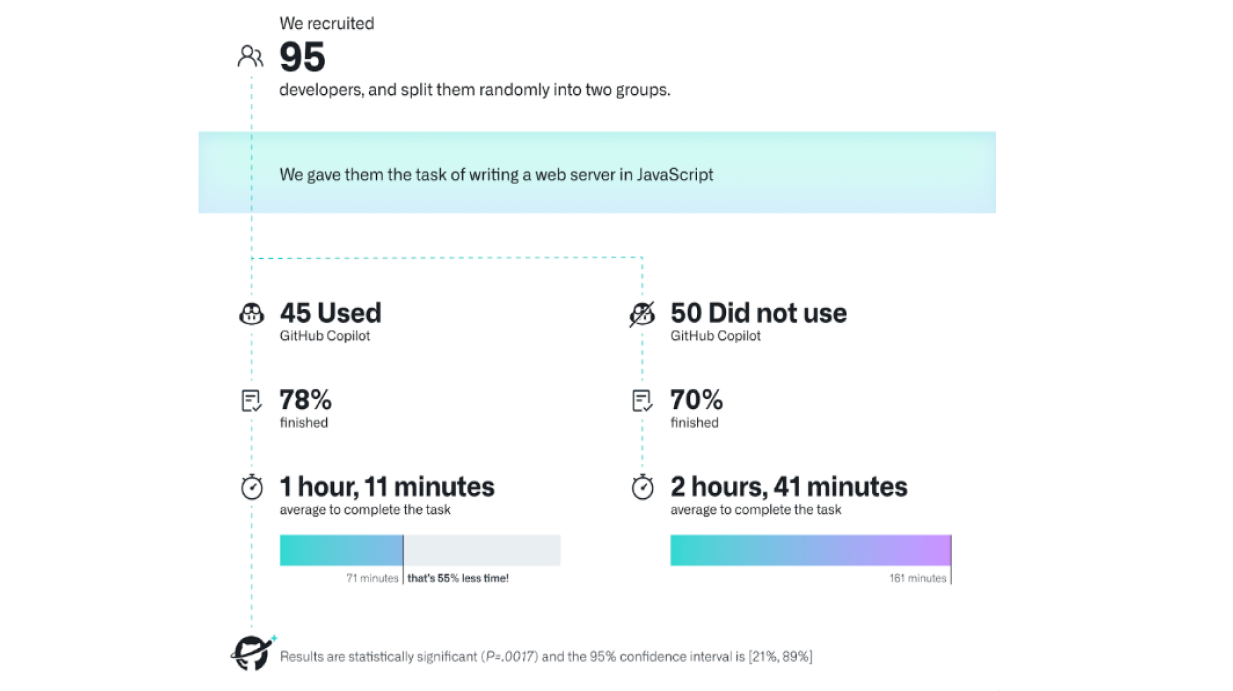
• Software engineers: Today there are tools such as Github Copilot, Duet AI for developers, Code Whisperer, among many others, that allow generating code from instructions in natural language, auto-completing code, or explaining a portion of it.
In a investigation conducted by GitHub to determine how it affects productivity (based on the framework SPACE) of software engineers in the area of writing code, results were obtained such as the time reduction in specific development tasks, since with the tool it took them a 55% less time, than those who did not use it.
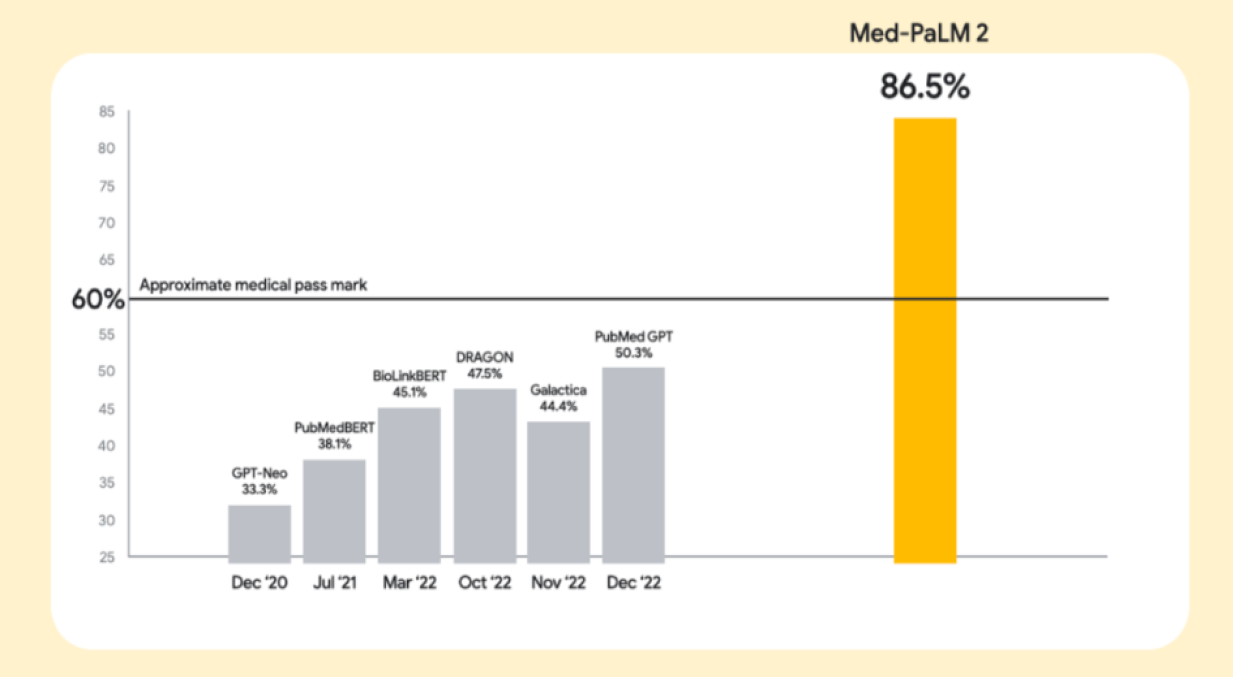
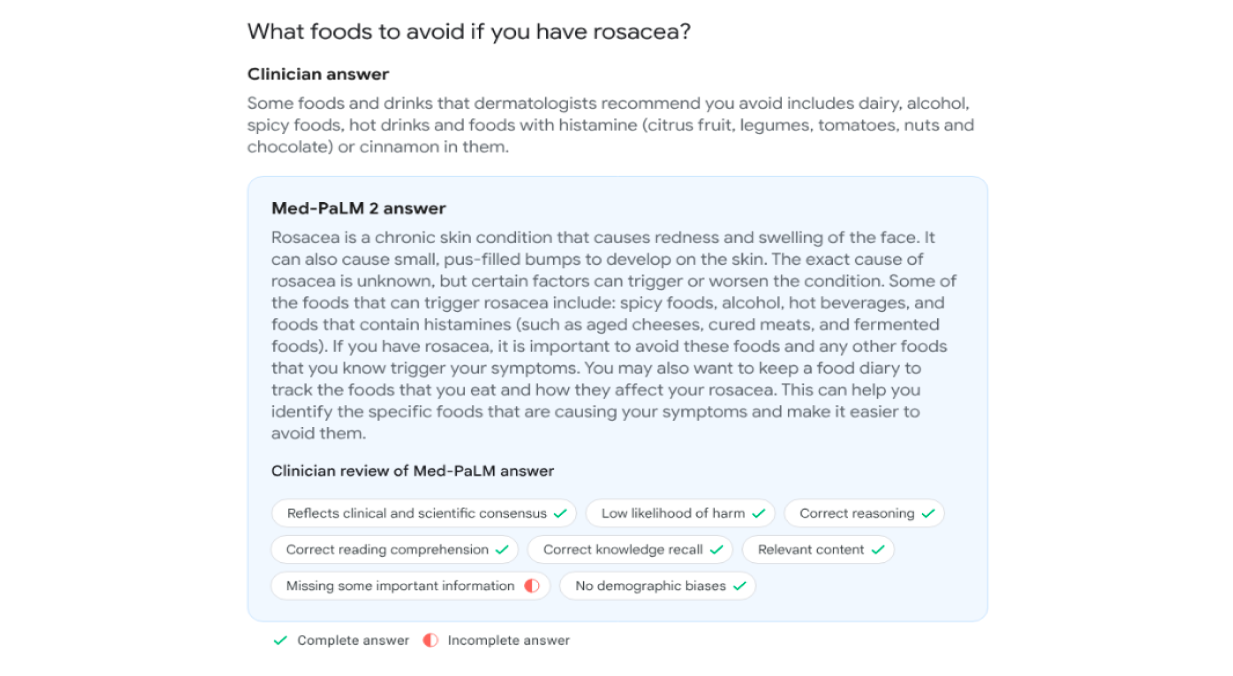
• Medicine: We don't only see these kinds of improvements in the field of technology; in the world of medicine there are also great advances such as Med-Palm 2, a Large Language Model (LLM) designed to provide high-quality answers to medical questions. Med-PaLM 2 It achieves an accuracy of 86.5% on USMLE-style questions.
Understanding this, we must learn the proper way to adapt to this technology that is here to stay, take advantage of it, and debunk the myths that exist around it.
How can we prepare for the future of AI?
In August of this year, Open AI published a paper that refers to the professions most affected by generative AIOne of the findings is that around 80% of the US workforce will experience at least a 10% disruption to their tasks, and 19% will face an impact of up to 50% on their day-to-day activity.
To prepare for the future of AI, it's important that we train in skills that are complementary.
For example, problem-solving skills, creativity, and critical thinking will become increasingly relevant.
It is also vital that we are willing to learn new things and to adapt to change. AI is revolutionizing the world at an accelerated pace, and being prepared for it is key.
It is essential to improve workers' skills in new digital competencies through training programs up-skilling and re-skilling. In this way, the workers of the future They will use AI as a tool and they will be able to thrive alongside technology, focusing on the functions that require human capabilities and that technology cannot replace.