



When we are part of a team with an agile framework, our actions are automatically directed to produce results in a short time and, sometimes, we take for granted basic principles that determine the success of a project.
In most cases, the success of agile projects comes from the ability of team members to generate assertive communication, which allows them to stay aligned regardless of the role they are playing.
On the other hand, another factor that has a positive influence is the good synergy among its participants. It sounds rather cliché, but both are crucial when it comes to carrying out a successful project.
To put things in context, I would like to review both terms: Assertive Communication and Synergy.
They weren't in the hands of large corporations, but rather in ordinary homes in the form of video game consoles or gaming PCs. This was due to the fact that few computer programs required the processing power of a game in the year 2000.
Assertive Communication
It is characterized by expressing ideas, feelings, opinions, and needs clearly, directly, and respectfully, while also respecting the rights and opinions of others. It is based on honesty, empathy, and seeking a balance between one's own interests and those of others.
It is important to raise awareness that, when involved in a project, communication can take place in various ways:
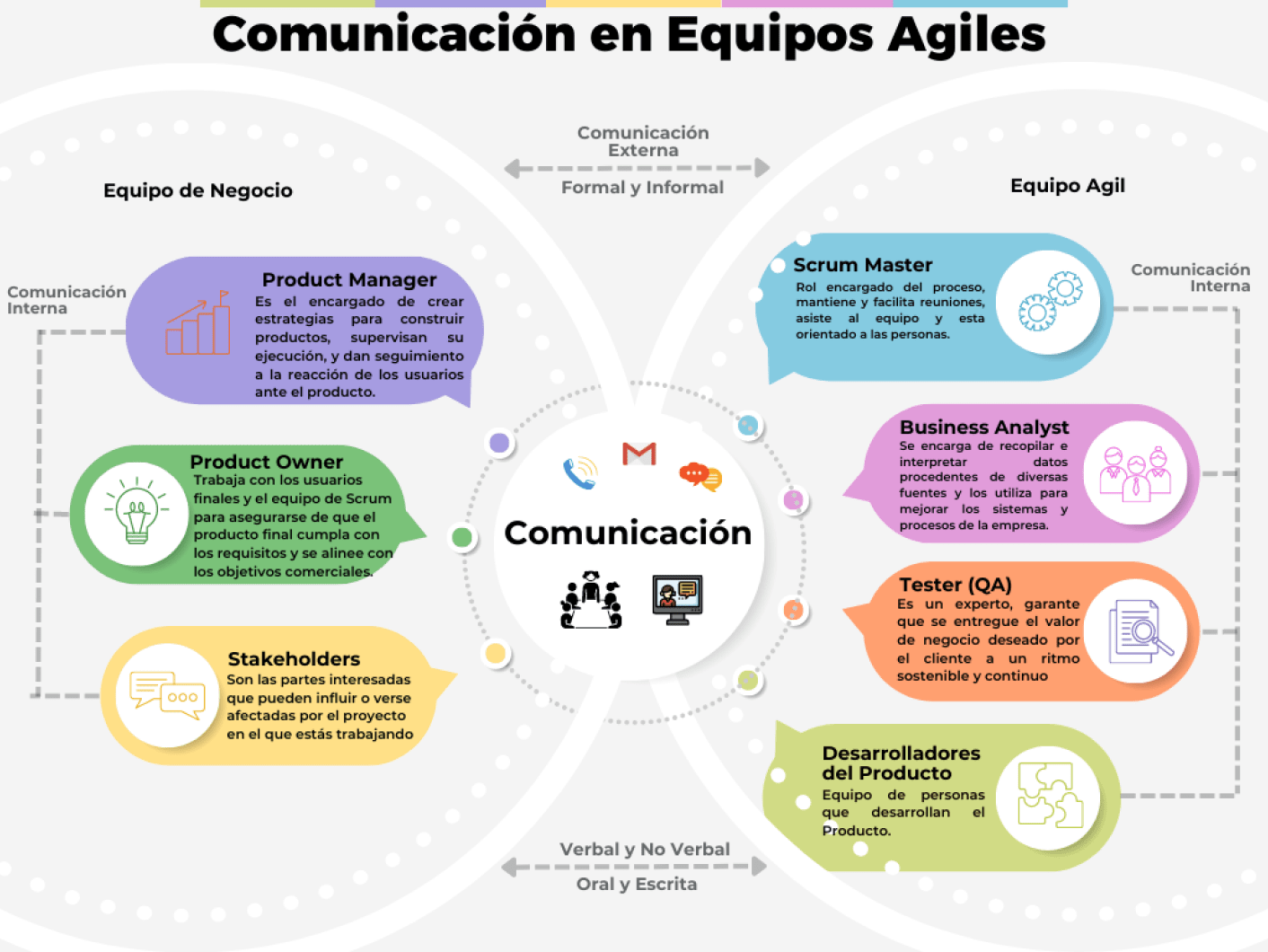
• Internal: This is the one that takes place with the work team (PO, Scrum Master, Desa).
• External: We conduct it with the client, users, stakeholders, suppliers and other business units.
• Formal vs. Informal: Reports, presentations, documents vs. emails, remote work meetings, hallway conversations or phone calls.
• Vertical/Horizontal: Vertical towards the different levels of the organizational structure and horizontal, between colleagues.
• Written vs. Oral.
• Verbal vs Non-Verbal: Sometimes, we neglect the importance of non-verbal communication and the way we behave towards an interlocutor (attitude, posture, gestures, behavior, distractions, among others) which can become an obstacle.
If we analyze the above, we can see that assertive communication is vital for the effective management of a project. It sounds easy, but putting it into practice can sometimes be quite challenging.
What are the benefits of assertive communication?
• Improved collaboration: Fosters a work environment where team members feel comfortable expressing their ideas, opinions, and concerns, boosting efficiency and the quality of teamwork.
• Effective conflict resolution: Team members can express their views clearly, respectfully, and constructively, and seek solutions that benefit everyone, contributing to the reduction of tensions and the building of stronger relationships.
• Better decision-making: By encouraging active participation and the exchange of ideas, informed and consensual decisions can be made, promoting a diversity of perspectives.
• Increased trust and commitment: Create a climate of trust and openness within the team. Members feel valued and heard, which fosters their commitment to the goals and promotes a greater sense of belonging.
• Efficiency and agility: It avoids misunderstandings, saving time and energy. By transmitting information clearly and accurately, work processes are streamlined and errors or delays are minimized.
• Improved job satisfaction: When team members feel free to express their ideas and concerns, and are listened to and respected, job satisfaction is increased by a positive and stimulating environment.
In general, assertive communication in agile teams strengthens collaboration, conflict resolution, decision-making, and commitment, which in turn leads to greater efficiency, quality, and job satisfaction.
Synergy
It refers to the phenomenon in which team members collaborate efficiently and harmoniously, achieving results that are greater or superior to the simple sum of individual contributions, enhancing the team's results and performance.
When members experience synergy, an environment is created in which individual skills, knowledge, and strengths combine and complement each other productively, collaborating in the achievement of common goals.
What are the benefits of synergy?
• Increased productivity: Allows tasks to be performed faster and more efficiently, which increases the overall productivity of the team.
• Improved quality: By combining different perspectives and knowledge, problems can be identified and solved more effectively, leading to higher quality results and delivered products.
• Innovation and creativity: Encourages the generation of ideas, exploring new solutions and approaches.
• Greater satisfaction and motivation: When team members work in a synergistic environment, they feel valued, heard, and supported. This contributes to greater job satisfaction and motivation to achieve goals.
• Strengthening relationships: Promotes the building of strong and trusting relationships among members, strengthening cohesion and the sense of belonging.
To achieve synergy, in addition to promoting the points mentioned above, it is necessary to establish clear goals and well-defined roles, as well as to promote a positive and supportive work environment.
In any project where agile methodology is used, the combination of these two dimensions will strengthen team unity and generate the adaptability and agility necessary to face constant changes and challenges in order to achieve the goals.
A team that communicates effectively and works synergistically will be well-positioned to achieve its goals. Collaboration, coordination, and teamwork will enable outstanding performance, generating successful and satisfying results for everyone involved.