
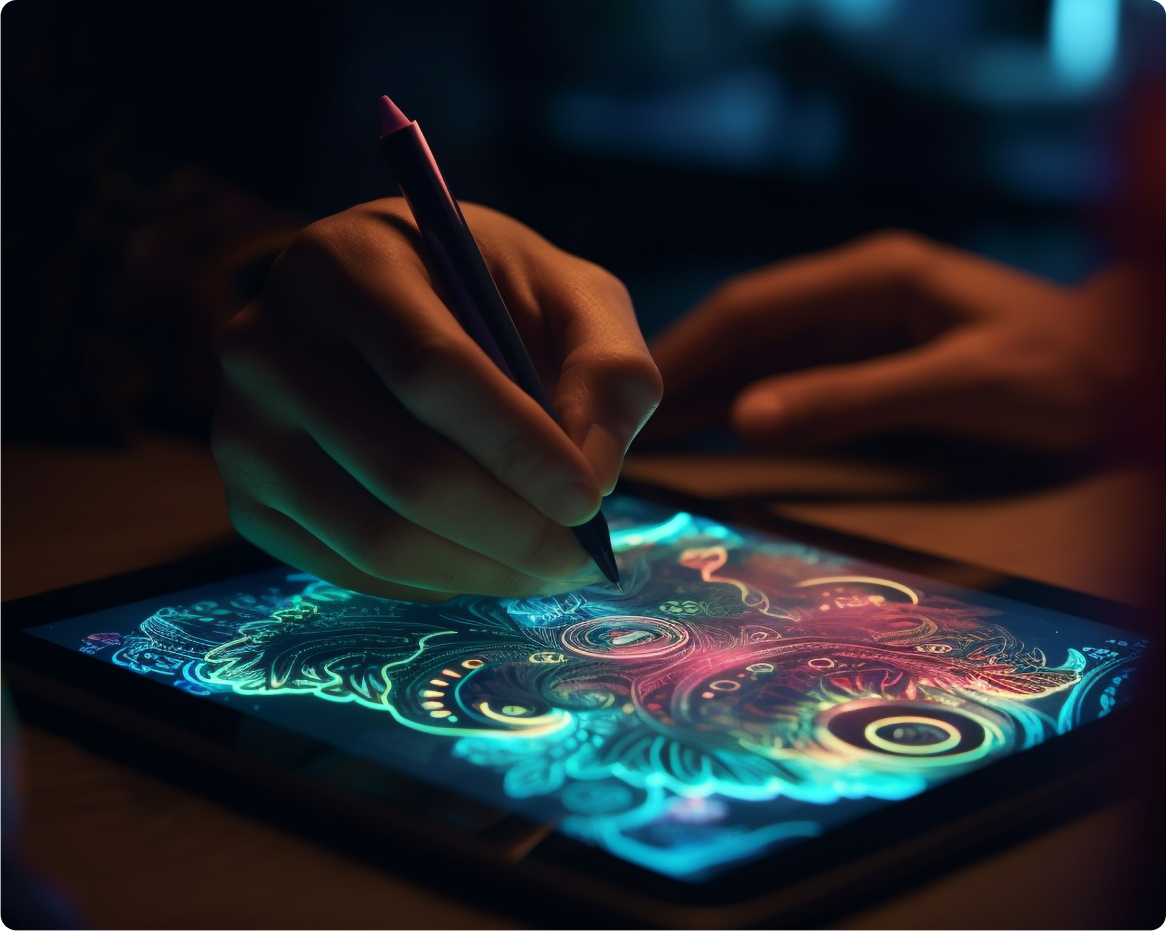


Artificial intelligence is gaining ground in the field of graphic design, which presents great benefits but also challenges for professionals.
Graphic design is a highly relevant area for communications in today's world, from corporate branding to product or service communication; everything involves creating Images that shock and captivate.
While various tools have been developed over the years to boost and professionalize services, the arrival of Artificial Intelligence is marking a before and after in the area.
What are the advantages of AI in the field of design?
• Enhance creativity: Machine learning and image generation algorithms allow designers to think outside the box, exploring concepts or visions that were previously unimaginable, opening up a world of possibilities.
• Automate repetitive tasks: AI can perform tasks in seconds that previously consumed time and effort (cropping, correcting errors, selecting colors, etc.), allowing designers to focus on strategic or creative tasks, enabling innovation and experimentation.
• Improve personalization: Through algorithms, it is possible to analyze user behavior and preferences, which is key to creating visual pieces that adapt to them, capturing their attention and boosting the emotional connection between customer and brand.
• Predicting trends: This technology allows for the analysis of large volumes of data, making it possible to identify trends in colors, styles, and typography. With this information, design teams will have everything they need to adapt to changing markets and deliver truly relevant designs.
• Create content automatically: Design professionals can provide specific parameters to AI algorithms so that, through that data, it can generate custom illustrations, images, and graphics that serve as an initial sketch or reference idea.
• Have virtual assistants: AI virtual assistants can learn designers' preferences and needs to help them with ideas, fonts, color proposals, graphic elements, and even create sketches.
What challenges do professionals face due to AI?
The main challenge for graphic design professionals is that they must have a high adaptability to leverage the benefits of AI and remain relevant within the industry.
To achieve this, they must keep the following points in mind and strengthen their skills based on them:
• Elevate your creative vision: While AI helps with image creation, creative ability is inherent to human beings, so design professionals must ensure that designs are as creative and original as possible.
• Achieve visual consistency: Design teams have a duty to maintain memorable graphic lines that encourage brand or product recall, so they must edit or modify the proposals delivered by AI to maintain typography, colors, formats, etc.
• Maintain originality: A technology powered by algorithms can deliver similar content to multiple users. This is where the designer's role becomes crucial; they must elevate the proposals to make them original and distinctive.
• Ensure legibility: Design experts are able to ensure proper contrast and color combinations, implementing their knowledge of color psychology so that everything together has the best legibility.
• Ensure the conceptual vision: This is a strategic stage, in which the designer is key to understanding the brand's needs and creating a defining identity around them, using visual examples, colors, fonts, shapes, styles, etc. The idea is then brought to life through prototypes.
• Ensure ethical conduct: Design professionals must not only ensure that the products they create are original and creative, but they are also responsible for ensuring that algorithms do not perpetuate biases or stereotypes.
Undoubtedly, AI has arrived to change everything, but it is essential to understand that this technology does not replace, nor will it ever, to the work of a designerWe must be flexible enough to understand that it is a tool that models can use to our advantage to enhance our professional expertise and maximize skills.
References:
Ref 2: https://www.aulacreactiva.com/impacto-inteligencia-artificial-diseno-grafico/